





Description
| Product Name | CAT.No | Size |
| Rh Phenotype +K (Blood Grouping Gel Cards) | OBGRHK24 | 24 Test Cards |
Product Description
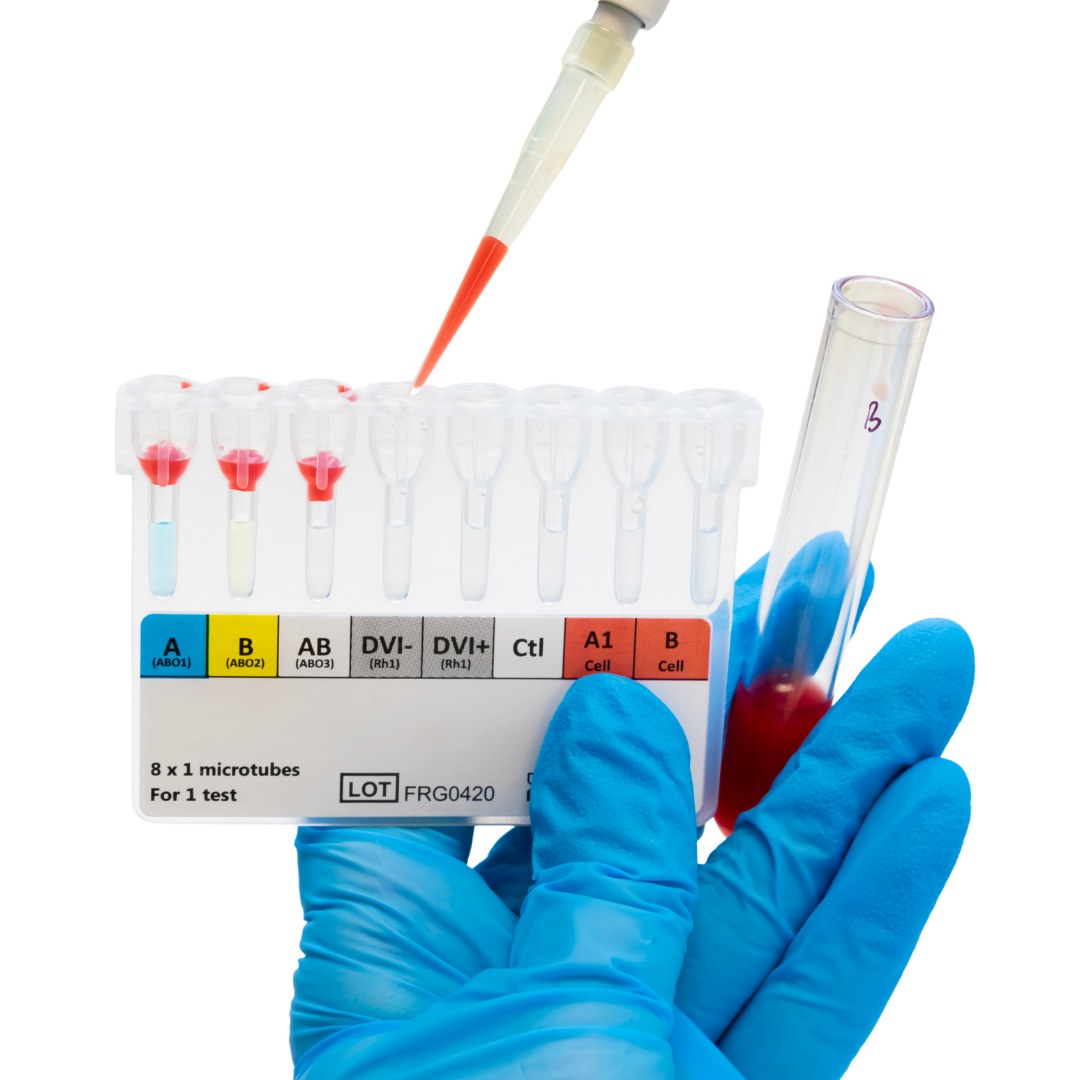
The Rh Phenotype +K Blood Grouping Gel Cards from Biorex Diagnostics are high-quality, ready-to-use gel cards designed for precise detection of clinically significant Rh antigens (C, c, E, e) and the Kell (K) antigen. Using the gel card technique, these cards enable laboratories to identify antibodies that may cause haemolytic transfusion reactions (HTRs) or haemolytic disease of the foetus and newborn (HDFN). Their reliable performance ensures safe transfusions, accurate prenatal screening, and confident clinical decision-making.
Key Benefits
- Comprehensive Rh and Kell Detection: Detects all clinically significant Rh antigens and the K antigen, supporting accurate blood group determination and transfusion safety.
- Enhanced Patient Safety: Identifies antibodies that may cause severe HTRs or HDFN, including clinically important anti-c antibodies.
- User-Friendly Gel Card Format: Pre-filled microcolumns simplify workflow, reduce manual handling errors, and increase laboratory efficiency.
- Versatile Laboratory Use: Compatible with manual gel techniques and automated analyzers, providing flexibility for a wide range of laboratory settings.
Applications
- Rh Phenotyping for safe transfusions and donor selection.
- Kell antigen detection to prevent transfusion complications and HDFN.
- Compatibility testing in transfusion medicine.
- Prenatal antibody screening in pregnant women.
- Laboratory quality control, training, and proficiency testing.
Storage and Handling
Store at 2–8 °C, protect from sunlight, moisture, and temperature fluctuations, and follow standard laboratory safety procedures.
The Biorex Diagnostics Rh Phenotype +K Blood Grouping Gel Cards combine sensitivity, reproducibility, and ease of use, making them ideal for hospitals, blood banks, and clinical laboratories. By enabling accurate Rh and Kell antigen detection, these gel cards help laboratories prevent transfusion reactions, reduce HDFN risks, and maintain the highest standards of patient care and blood safety.
Contact Us for more information